


Meet the author:
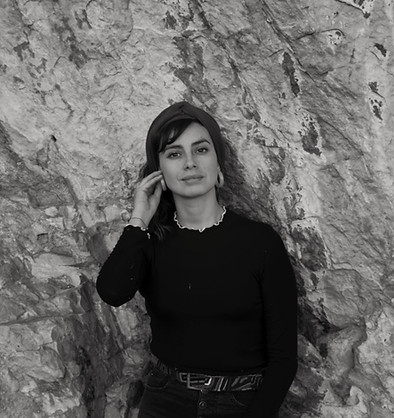
Sandra W Rodríguez Castañeda
Your narrative unfolds in two parts: your journey through Jaén in search of Judith (Side A), and her mother’s memory traced across landscape (Side B). How did this structure emerge, and what does it allow you to say about proximity, distance and bearing witness?
‘Do you remember that girl’ grew from fieldwork for a small research project on the emotional trajectories of abortion in Cajamarca, Peru. The two-part structure – Side A and Side B – holds together, but also materially separates, two contrasting memories of how Judith died. Side A marches the reader beside me as I chase the official version of events through the clues offered by health providers. In this terrain the word ‘abortion’ – a sticky term in Sara Ahmed’s sense – saturates the narrative with stigma and a misleading sense of certainty. Side B opens only when we meet Judith’s mother; here the fanzine is physically unfolded, and the term ‘abortion’ vanishes. In its place we find the mother’s intimate recollection of how she accompanied Judith in her final days – an itinerary marked by uncertainty rather than verdict. This is paired with an imaginative rendering of Judith’s last day: eating pineapples and looking out from her doorstep. This seemingly banal detail matters to me because it allows us to move beyond the memory of her tragic death and glimpse who she was a person – what she liked, how she lived. It invites a moment of contemplation, induced by the expanse of the page, of the everyday view she once had before her.
You move through this piece not only as a storyteller, but also as an ethnographer and fellow human being. How do these roles intersect or come into tension as you navigate a story marked by absence, uncertainty and grief?
I often say this fanzine emerged from academic failure: the failure to approach the story, to make sense of it, and to represent the silences, ambiguities and incompleteness it carried with the tools I had learned so far. Before beginning the project, and amid my disillusionment with academic prose and methods, I turned to feminist political geographers whose work felt radically different from what I knew. Sarah de Leeuw’s research practice moved me deeply, not only the way she braided the intimate with the structural, but how she attended to things I had been trained to overlook, as well as how her use of creative writing and storytelling could make readers listen differently. Sarah Smith also taught me to take seriously the ‘angst in the field’, to make space for being affected rather than dismissing the researcher’s emotion as irrelevant, and to write and act from that place. Angst is a call to pay attention to our sense of responsibility towards the stories of our interlocutors. In the years since this small research project, I have redefined the kind of ethnography and academic world I want to inhabit: one where rigour is not only compatible but demands experimentation across media in the search of forms that can remain attuned or porous to the messy, fragmentary nature of lived experience.
In the encounter with Judith’s mother, grief blurred method for me. How my brief interaction with Judith’s mother sat in my chest, unsettled any idea of methodological detachment. This fanzine became a small way of doing something from or with that discomfort. However, my aim is not to resolve or fully contain what happened. In this sense, the story ends on a question mark as an ethical gesture, refusing closure and creating space for doubt, silence and unsettling emotions.
Judith’s death and her mother’s recollections are treated with profound care. How did you approach the ethics of telling this story visually and narratively? Were there moments where the work resisted representation or demanded a different kind of listening?
In the Global North academy, ethics can be treated as a checklist: a series of boxes to tick, primarily designed to shield institutions. Against this administrative approach, I find guidance in Indigenous scholar Margaret Kovach, who understands research as a process of self-in-relation. Ethical questions, then, are not abstract principles to apply but matters to be examined within the relationships we build and encounter in the process of research; because these relationships are not static, ethical reflection needs to be ‘each time taken in singular configurations’, as Didier Fassin puts it. This aligns with Fassin’s idea of ethnographic consent as relational and sequential rather than as contractual agreement. Where time or money constraints forestall long-term engagement, responsibility becomes the discomfort of answering to stories we were only briefly lent.
This stance is not a badge but an aspiration that I find myself continually negotiating. How, then, did I negotiate this sense of responsibility in telling Judith’s story? In recent years I have become increasingly concerned with the politics of representing violence, especially when raw depictions are justified in the name of ‘making a problem visible’, as if visibility alone, following a simplistic theory of change, could undo harm. How to write about Judith’s story without flattening it to an image of suffering, reproducing simplified accounts of victimhood? My unease with ‘making visible’ intensified here because I only knew a thin fragment of her life. Would building a portrait solely from her life’s ending shrink her into a cautionary statistic? How to do it, acknowledging that any representation choice produces its own shadows and cannot erase the relationship’s asymmetries?
Instead of filling the gap I chose to stage it. The fanzine tracks the slow and incomplete unravelling of the story. By inserting myself in the fanzine I ask the reader to establish what Geraldine Pratt calls a ‘more difficult contract’: walk the route, and through that movement, shift from spectator to witness. A spectator passively consumes; a witness lets herself be affected. This is not an invitation to imagine yourself in Judith’s shoes – empathy can be too easy, even comforting, and may obscure the very inequalities at stake. I wanted that gap to stay open. Following Liz Bondi, I aimed to preserve an ‘ongoing sense of the alterity of the other’. The point is to never merge with Judith, but to meet the inequality that keeps your lives apart. The mapped route in Side B makes this concrete: the road I travelled healthy, asking questions, is the same road she travelled while dying, in uncontrollable haemorrhage. For me, this is where the ethical invitation resides: not in collapsing distance but in being unsettled by it. The work asks the reader to sit with that discomfort.
You use landscapes and maps to convey the mother’s memories. How did you decide on this visual approach to representing memory? How do the geographic elements, like the final map overlay, contribute to conveying her perspective and the story as a whole?
Memory and geography are inseparable here. The fanzine can be read as a topographic diary: with every page-turn we gradually move inward, scaling down from the provincial capital of Jaén, to Chirinos, to Indoamérica, and finally to the family’s door. This embodied movement, marked by each vignette, becomes a temporal device that makes visible not only geographical but also social distances. Drawing the surrounding landscapes was crucial. I wanted the reader to sense the shift from the plaza of a provincial capital, with their restaurant where we sit for coffee, to increasingly precarious infrastructures – from the Centro de Salud to the Posta de Salud – and to ever more unreliable (and expensive) transport vehicles. Each jump in scale drags the reader down the health-care ladder. Having travelled that route, the reader is allowed to reconstruct the journey Judith and her mother undertook, and to sense how challenging surviving a health emergency for the disenfranchised is. The mapped route in Side B is a mirrored route that, like a door hinge, underscores geographical and social alterity.
In Side A, you follow whispers and partial stories across a terrain marked by both silence and testimony. How did the journey itself change your understanding of Judith’s story and your own place in it? What kind of truth can emerge from moving through fragments and making sense of it through a fanzine?
Side A and Side B are shaped by different kinds of silences and different registers of truth. Judith’s clinical record likely reduced her death to complications derived from an ‘incomplete abortion’, whether induced or not. For the state, this is the single fact that survives her. What this memory refuses to say, however, exposes the entanglement between the criminalisation of abortion and stratified reproduction – the process through which certain lives are rendered less worthy of care and treated as ‘undeserving’ of reproduction. Side B holds another vast silence: the lacunae surrounding pregnancy itself. This silence speaks of a socially compelled erasure to secure social survival amidst conditions of stigma and fear. The fanzine journeys through rumours, silences, uncertainties and fragments, staging a collision of these two sanctioned silences – institutional and domestic. It does not offer a definitive account of what happened but through these fragments it articulates a sociological truth about the conditions that mute, endanger and, ultimately, erase certain lives.


Sandra W Rodríguez Castañeda is a Peruvian anthropologist whose works sits at the intersection of social reproduction, political ecology and peasant politics, integrating creative and audiovisual methods in research and dissemination. She is currently a PhD student at the Institute of the Americas, University College London.
See Sandra's graphic piece ‘Do you remember that girl?’ in the Contours issue.
This interview was conducted by Otherwise visual and sound editor José Sherwood Gonzalez
