


Meet the author:
Yazmin Carrasco
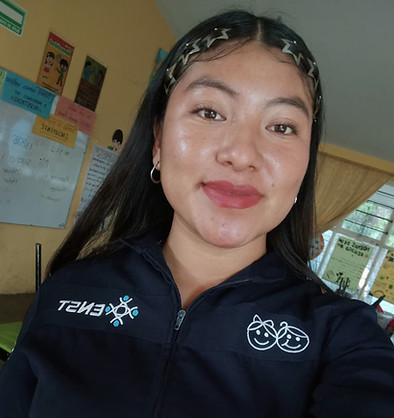
With great joy I greet you.
My name is Yasmin Guadalupe Carrasco de Jesús. I am from the community of San Luis de Temalacayuca, and I am currently finishing my degree in primary education at the Escuela Normal Superior de Tehuacán. Growing up in a territory where the Ngigua language is spoken, and where the cosmovision links nature with time and acts of care, has led me to reflect on the importance of protecting my identity, which represents me as part of a community. In this space, the knowledges, the stories and the ways of life passed on by my grandparents and my parents have given meaning to what is collective.
However, today, due to many factors, they are at risk of disappearing through processes such as discrimination, migration and the loss of cultural identity. In this context, the invitation around the Amoxtli represented an opportunity to recover and make visible my memories, the experiences and knowledges that are not always considered in traditional academic spaces. The Amoxtli, understood as a space of welcome, listening and encounter, allowed me to recognise the importance of telling from lived experience, from that which is felt and remains.
More than explaining or analysing, it was about opening a place where stories can be shared from the heart, listened to and valued in their own form. For this reason, the first text I present is a critical reflection on the transformation of the relationship between the community and the land. It expresses a concern about the use of modern planting techniques, which have set aside respect, care and reciprocity towards nature.
This reflection is situated in the perspective of women, who have historically sustained practices of care, traditional medicine and the transmission of knowledges within my territory.
The second text is a life history that gathers the experiences of an Ngigua woman. Through her memories, processes of change become evident, as well as situations marked by inequality and cultural imposition, such as the loss of the Ngigua language.
This account was built through a different approach, where the aim was simply to create a space of listening and encounter, allowing the story to emerge from emotions and lived experiences, without a rigid or academic structure. The aim was to recognise memory as a valid form of knowledge.
Both texts seek to give an account of the transformations that communities are undergoing, particularly in the passage from the collective to the individual, and to invite reflection on the importance of preserving cultural identity and the knowledges that sustain it.
I am deeply grateful for this space of listening and of speaking, which allows us to share and to value those stories and memories that also construct knowledge from the everyday. I hope that these texts contribute to recognising the cultural richness of our communities, and to strengthening respect for our roots.
Goodbye for now, with warm greetings from Yazmin.
Con mucha alegría les saludo.
Mi nombre es Yasmin Guadalupe Carrasco de Jesús, soy originaria de la comunidad de San Luis de Temalacayuca, y actualmente me encuentro por culminar la licenciatura en educación primaria en la Escuela Normal Superior de Tehuacán. Crecer en un territorio donde se habla la lengua ngigua, y donde la cosmovisión vincula a la naturaleza con el tiempo y los cuidados, me ha llevado a reflexionar sobre la importancia de proteger mi identidad, que me representa como parte de una comunidad. En este espacio, los saberes, las historias y las formas de vida transmitidas por mis abuelos y mis padres me han dado sentido a lo colectivo.
Sin embargo, hoy en día, debido a muchos factores, se encuentran en riesgo de desaparecer, por procesos como la discriminación, la migración y la pérdida de identidad cultural. En este contexto, la invitación a la Amoxtli representó una oportunidad para recuperar y visibilizar mis memorias, las experiencias y saberes que no siempre son considerados en los espacios académicos tradicionales. La Amoxtli, entendida como un espacio de acogida, escucha y encuentro, me permitió reconocer la importancia de contar desde lo vivido, desde aquello que se siente y permanece.
Más que explicar o analizar, se trató de abrir un lugar donde las historias puedan ser compartidas desde el corazón, siendo escuchadas y valoradas desde su propia forma. Por ello, el primer texto que presento es una reflexión crítica sobre la transformación de la relación entre la comunidad y la tierra. En él se expresa una preocupación por el uso de técnicas modernas de siembra, que han dejado de lado el respeto, el cuidado y la reciprocidad hacia la naturaleza.
Esta reflexión se sitúa desde la mirada de las mujeres, quienes históricamente en mi comunidad han sostenido prácticas de cuidado, medicina tradicional y transmisión de saberes dentro de mi territorio.
El segundo texto es una historia de vida que recupera las experiencias de una mujer ngigua. A través de sus recuerdos se evidencian procesos de cambio, así como situaciones marcadas por la desigualdad y la imposición cultural, como la pérdida de la lengua ngigua.
Este relato fue construido a partir de un enfoque distinto, en el que se buscó únicamente generar un espacio de escucha y encuentro, permitiendo que la historia emergiera desde las emociones y las vivencias, sin una estructura rígida o académica. Se buscaba reconocer la memoria como una forma válida de conocimiento.
Ambos textos buscan dar cuenta de las transformaciones que atraviesan las comunidades, particularmente en el tránsito de lo colectivo hacia lo individual, así como invitar a la reflexión sobre la importancia de preservar la identidad cultural y los saberes que la sostienen.
Agradezco profundamente este espacio de escucha y de palabra, que permite compartir y valorar aquellas historias y memorias que desde lo cotidiano también construyen conocimiento. Espero que estos textos contribuyan a reconocer la riqueza cultural de nuestras comunidades y a fortalecer el respeto por nuestras raíces.
Hasta luego, les saluda Yazmin.
Yazmin Guadalupe Carrasco de Jesús is from San Luis de Temalacayuca, a community in the Ngigua-speaking territory of Puebla, Mexico. She is completing her degree in primary education at the Escuela Normal Superior de Tehuacán, and her work sits at the meeting point of pedagogy, memory and cultural identity.
Read Yazmin's piece 'The treasure of the Ngigua girl'
in the Amoxtli issue
Yazmin Guadalupe Carrasco de Jesús es originaria de San Luis de Temalacayuca, una comunidad del territorio ngigua en Puebla, México. Está por culminar la licenciatura en educación primaria en la Escuela Normal Superior de Tehuacán, y su trabajo se sitúa en el cruce entre la pedagogía, la memoria y la identidad cultural.
Lea 'The treasure of the Ngigua girl' de Yazmin en Amoxtli.
This interview was conducted by Otherwise visual and sound editor José Sherwood González.
